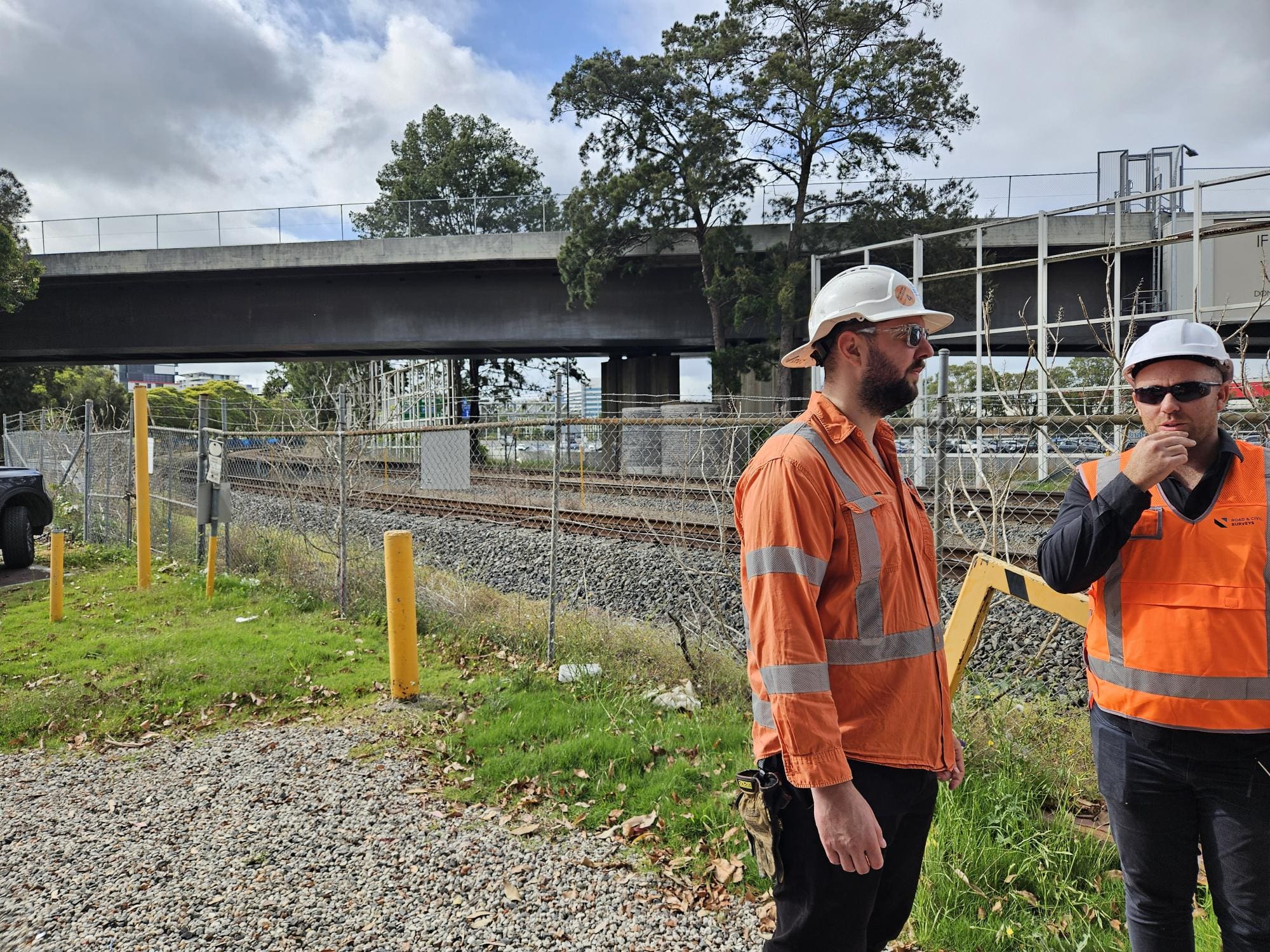
The first day on site tells a contractor most of what they need to know about a survey crew. Tier 1 contractors run tight programs with little room for a slow start. A setout crew that turns up ready earns trust fast. One that turns up still working out the basics costs time before a single peg goes in.
Here is what experienced contractors expect from a setout crew from day one, drawn from what works on major infrastructure jobs.
Why the first day carries weight
Setout sits at the front of the build. The trades that follow rely on the marks being right and on time. So a contractor reads the setout crew early, because that crew sets the pace for everyone behind it. A confident, prepared start signals a crew that will protect the program. A shaky start signals a crew the site team will have to manage closely. Day one is a preview of the whole job.
1. Control that is ready and verified
A strong crew does not arrive and ask where the control is. They have confirmed it ahead of time, checked the marks, and tied them to the right datum. Control that is verified before setout starts means the crew works from hour one rather than spending the morning chasing marks. This is the groundwork that good construction setout depends on.
2. The right gear, checked and in calibration
Contractors expect instruments that suit the job and are proven to be in check. A total station or GNSS rover that has drifted reads off without warning, so the calibration records matter as much as the gear itself. Turning up with equipment that is current and traceable shows the crew takes accuracy seriously, and it heads off questions at the next audit.
3. Knowledge of the design and the spec
A setout crew that knows the current design revision, the tolerances, and the project’s inspection and test plan can work without constant direction. They know what is critical, where the hold points are, and what the auditor will check. A crew that has not read the spec becomes another task for the site team to carry.
4. Safety and inductions sorted
On a Tier 1 site, no one works until the safety side is done. Inductions, site requirements, exclusion zones, and permits all come first. A crew that arrives with paperwork complete and a real safety mindset slots straight in. Safety is part of being ready, not a hurdle to clear once work has started.
5. Clear communication and team fit
The best setout crews work with the project team rather than off on their own. They flag issues early, talk to the trades they set out for, and keep the site team informed. This is the part clients tend to remember. The crews contractors ask back are the ones that become part of the team and raise problems before they grow into delays.
6. Independent checking built in
Contractors expect a crew that checks its own work, not one that leans on the site team to catch errors. An independent check on critical setout is a sign of a mature workflow. Catching a mistake at the peg costs minutes. Catching the same mistake after the pour costs days, so the check pays for itself many times over.
7. Records from the first mark
Good crews keep clear, dated records from day one: what was set out, from which control, to which revision, and checked by whom. Those records feed straight into conformance and as-built. A crew that leaves a clean evidence trail saves the project real pain at handover, when the audit asks for proof.
The red flags contractors watch for
The warning signs are the mirror image of the list above. A crew that arrives asking where the control is, with no calibration records, unsure which design revision is current, or with safety paperwork half done, has shown its hand before any work starts. So has a crew with no checking step and no records to speak of.
None of these is fatal on its own. Together, they tell a contractor the crew will need managing rather than trusting. The strongest crews remove every one of these doubts before they reach site, so the contractor can hand over the marks and get on with the build.
Why this matters to a Tier 1 program
A setout crew at the front of the build sets the pace for the trades behind it, so its readiness shapes the whole program. A crew that arrives prepared protects the schedule. A crew that arrives half-ready turns into a daily management task and a steady source of risk.
This is why contractors weigh more than price when they choose survey support. They are buying delivery confidence: the assurance that the marks will be right, on time, and backed by records that hold up under review.
Readiness is what prequalification is really testing
Tier 1 contractors prequalify survey partners long before anyone reaches site. They look at capability statements, systems, certifications, and references. All of those are proxies for one question: will this crew be ready and reliable when it matters? Day one is where that question gets answered for real. A crew that arrives prepared confirms the contractor made the right call. A crew that arrives half-ready undoes the confidence the prequalification was meant to build. The strongest survey partners treat every first day as live proof of everything they put in the tender.
The difference that shows up on site
A crew that ticks boxes does the minimum and waits to be told. A crew that adds value reads the program, flags the clash before it happens, and keeps the build moving. Across a long project, that difference compounds into real time and cost saved.
Reliable construction surveying starts with a crew that is ready on day one and stays sharp through to handover. To see how we support major infrastructure delivery, explore our projects, or talk to our team about your next job.